Production

Bird’s Eye View of Harvest From the CCI Drone

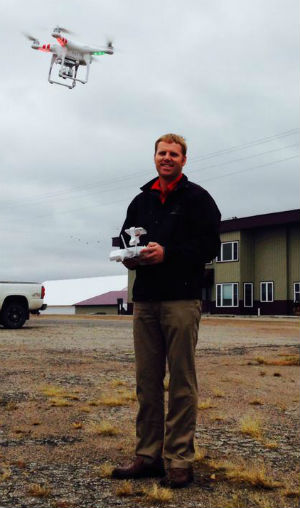
Back in October, I was flying high after purchasing a drone for use at Corn Capital Innovations. Just like a kid on Christmas, I was excited to play with my new toy! But our drone is much more than just something shiny to fly around, it serves two important purposes to our business.

  1. It’s a great tool for use during our agronomy work.
  2. It’s another set of eyes for us to see what is going on in our customer’s fields.

View of Harvest Using the CCI Drone

Watch this video of our drone in action during the 2014 corn harvest.

Benefits of Drone Farming

Interest in using drones in agriculture is growing. Here are some benefits of using a drone for farm operations.

  • Having a bird’s eye view of your fields is the Drone Farmingquickest way to see and interpret if you need to take action in your production strategies.”
  • Using drones for crop surveillance can drastically increase farm crop yields while minimizing the cost of walking the fields or airplane fly-over filming.
  • Checking on your plants’ progress and determining if they need more attention is quicker and easier using a drone.
  • Using a drone effectively can save you time and money.

Potential Drone Uses

The use of drones in agriculture is still in its early stages. Here are some promising future uses for drones on your farm.

  • Crop Scouting
  • Precision Spraying
  • Disease Monitoring
  • Livestock Tracking

Additional Resources

Please take a few minutes to read these additional resourses and further educate yourself about the use of drones for agriculture.

Contact Corn Capital Innovations

Let our experienced team help you determine if you need to take action in your production strategies using cutting edge technology like drones. Please contact us at (320) 523-2252!

Have you considered using a drone in your operation? Do you have any questions we could answer about the use of drones?

Observations From the Combine – 2014 Year In Review

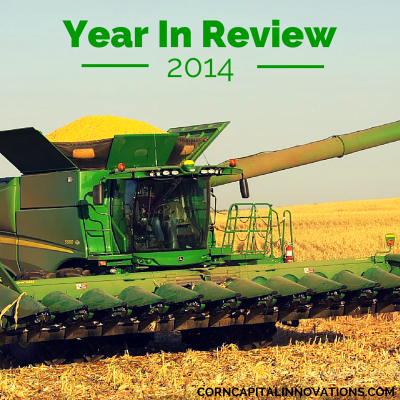
What observations did you make from your combine or tractor this year? Steve and I asked ourselves this very question. After some thought, we wrote this year in review highlighting the factors that we felt had the most influence on the 2014 growing season and the importance of starting a cropping plan for 2015.

Challenging Planting Season
2014 CCI ReviewThe 2014 planting season was challenging to say the least. Farmers had a limited number of days to get this year’s crop planted due to spring rains and cool weather. The majority of corn fields in our area were planted between May 16th to May 19th and from May 22nd to May 26th. Soil conditions during planting season continue to be the number one factor to producing a top crop.

This later than normal planting window left little time for corn plants to establish their roots before the soil was inundated with heavy rain fall in June. In many parts of our growing area this was the highest rainfall amounts farmers have seen since 1993.

After the rains finally stopped, farmers carried through late June and early July with soils so saturated that many weren’t able to get spraying applications completed before the corn was too tall. While the temperature remained moderate, the majority of the corn was pollinated during the last week of July into the first week of August. After pollination, several areas went some time without receiving any additional rain; leaving poorly developed roots unable to establish nutrient movement and feed the plant adequately. Areas that missed the heavy rains in June, or received rains in August, fared much better.

Heavy Rainfall & Stressed Crops

The higher than average amount of rainfall area farmers received in June, caused the crop’s nutrient demands to be out of reach for the plant’s roots. Soil nitrate samples taken in mid-July showed that this year’s crop had little to no nitrogen left in the rooting zone, while the corn plants were still calling for 50% of their nitrogen needs.

Difficult conditions continued when several fields were hit with a widespread frost on Sept 13th. Initially, it was not categorized as a yield affecting frost. Later, it was discovered that this frost may have affected the crop to a much larger degree.

In low lying areas of fields, where corn plants were fighting all year with saturated roots, there was a delayed development of these plants. These already stressed plants were then hit with a frost event that created a double whammy, depriving bushels in areas of the fields that are usually the highest producing areas on the farm.

Yield Results & Staying Positive

What we have witnessed this fall is 1000 variables created by one major element in crop production that being excessive rainfall. As farmers look back at the 2014 Harvest, it is obvious that yields were directly correlated to the production capabilities of each piece of ground and how that piece handled excessive water and stressful conditions. Having a good risk strategy made all the difference in agronomic decisions this growing season.

After a challenging 2014, it is important for farmers to focus on the positives; the successes of their operations this year, and capitalize on those successes in 2015. When you make production decisions in low yield environments, the opposite tends to occur the next year. Don’t be reactive, be proactive!

2015 Planning Starts Now!

Now’s the time to focus on farm planning for 2015. Next year will be different, with lower prices; farmers must focus on increased crop production to lower break evens. When presented production challenges tied to adverse market prices, a written plan and a positive attitude will minimize the emotions of making poor decisions. Contact the Corn Capital Innovation Team; we have the knowledge and resources needed to help you plan to achieve a successful farming operation in 2015.

Do you have any additional thoughts on 2014? Have you started planning for 2015?

Everything That Happens Above Ground Starts Below Ground

What is NEPS and how do you calculate it?

Net Effective Plant Stand (NEPS) is the total plant population minus late emerging plants and poorly spaced plants. The percentage is NEPS divided by total plant population. Typically this measurement is collected when plants are at the 4-8 leaf stage.

Most people look at a plant population once the field is planted; however, we analyze how many of those plants are actually full producing plants. Raising corn is no different than raising hogs. If you have a runt pig, it will always be a runt pig that doesn’t produce to the fullest potential while still using the same amount of resources to do so. Much like runt pigs, delayed emerging corn plants are stealing your profits.

Why is it important for our customers to look at NEPS each year?

Each year at CCI we look at NEPS for every field that a grower plants of our product. This is important for a grower to see and understand how tillage, seed quality, soil conditions, and residue management affect their plant stand of corn. We then use all of this information that has been collected to help growers make changes to their operation and their farming methods to ensure that they are making progress on improving their profitability while improving their skills in the field.

Why are NEPS important for us at CCI to look at?

We use NEPS as a catalyst for change. There are over a 1,000 variables that go into raising a great crop. Most variables are out of our control, but as we often say, the person who controls the most variables that they actually have control over will always out produce their competition. As a company, we can control seed quality, and we do so with very stringent testing of our seed not only at our conditioners, but also once it enters our warehouse. Before a bag of our seed is delivered to a farmer, it has been tested a minimum of 3 times at 3 different labs to ensure that it is the highest quality seed.

Understanding the genetic makeup of the hybrid is key to placing it on the right piece of ground. The right hybrids on the right piece of ground are two factors that can help you take your yield to the next level. Here at Corn Capital Innovations, we pride ourselves in helping production experts as yourself take high quality seed and place it on the right acre in your field.

Remember, everything that happens above ground starts below ground!

What did we see this year in the fields?

The 2014 growing season will be remembered in large part for the challenges that occurred in getting the crop planted in a challenging spring, as well as, the deluge of water that occurred in June. When we conducted our NEPS evaluations this year, here is what we saw:

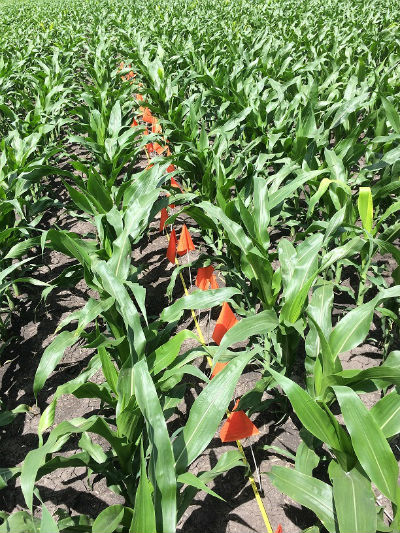
  • Soil Conditions at planting time are the #1 dictator of yield
  • High full producing ear counts (best stands we have seen in the last 3 years)
  • Significant differences on vertical tillage versus field cultivators
  • Vertical tillage had a 2-3,000 full producing plants per acre advantage
  • The field cultivator smear layer kept the soil anaerobic longer than vertical tillage tools thus the plants suffered more seedling diseases as well as prohibited root development

Check out these pictures of what we were seeing in the field!

In agriculture, growing smarter begins with collecting knowledge from hands on experience and our agronomists can work with you to get the latest technology that’s right for your unique growing challenges.

So now is the time to start planning for 2015, contact Corn Capital Innovations today to get a crop plan in place or update your current plan for the coming year!

Rain: The Crop’s Radiator

Rain - The Crop's RadiatorAre you getting weary of all the rain? Do you cringe every time you check the rain gauge or watch the local forecast? How is this weather impacting your crop?
Rainfall is one of the most important crop inputs and is also one that most farmers have little or no control over.  But many growers and crop production advisors see the role of rainfall primarily as the moisture supply that keeps plants alive.  It is akin to the gasoline in a car.  A plant needs water to operate the rest of the system.  Unfortunately, the only parts of a corn plant that can protect themselves from the heat is the leaves.  That is why corn plants take on an onion-like appearance when both temperatures and evap-transpiration rates are high and rainfall is low.  When a corn plan closes the pores in the leaves and curls the leaves inward, exposed leaf surface area is greatly reduced.  This conserves water and helps keep the leaves cooler.

Rainfall also serves a less known but far greater role than just supplying water to plants.  Water is the radiator that cools the engine of the plant, the root system.  The plant’s root system is the engine that runs the entire plant factory; unfortunately the roots have no way of protecting themselves when soil temperatures heat up.  And as long as the root system is overheating, they no longer have the ability to utilize nutrients efficiently.  It’s like the engine of your car overheating… the car eventually stops moving.  Rainfall cools the root system so it can once again properly conduct plan functions.

In 2010, as well as our current situation in 2014, many farmers across the country had more rainfall than they wanted or needed.  But most of those growers don’t realize how important that water is, even in excessive amounts.  It cooled root systems and allowed them to regain their ability to perform their proper functions.  And growers who knew the effects of cooling root systems, took advantage of getting them back to their normal function by immediately applying nitrogen.  Nitrogen is the antibiotic for both stalk rot and drought.  That means it is the main ingredient for overall plant health in a grass species like corn.

Read this article that discusses agronomic and disease issues for corn and soybean exposed to prolonged periods of high soil moisture. By Jeff Coulter, Extension Corn Agronomist with the U of M.

The number one reason why so much of the crop across the country was negatively affected by either drought or excessive water (more than it should have been) was because there were just too few applications of nitrogen to keep the plant factory running once the motor (the root system) was cooled down.  In so many cases the impact of excessive water would have been lessened greatly if that key additional coolant for that radiator would have been added repeatedly.

Fields where nitrogen was applied 4-5 time throughout the season yielded up to 80 bushels more per acre vs. those that went untreated.  Nitrogen not only allow the plant to stay healthy, it also helps the plant better utilize water for the development of grain.  Rainfall keeps plant root systems operative at critical temperature (65-86 degrees); the key to proper function.  Until a plant’s root system is operating normally, nothing you or the environment does really matters.

Do you feel differently about the rain now…maybe just a little bit?


What Does Matching the Right Germplasms Mean To You?

Seed Quality Corn Captial InnovationsIt is that time of year again, seed orders are being processed and delivered to customers.  Yet, do you as a farmer; fully understand what you are purchasing in that bag of seed?  Yes, it is corn seed but we view this seed as much more than just corn seed.  This seed is a genetic cross between a female and a male inbred to produce a hybrid.  At Corn Capital Innovations, understanding the genetic makeup of the hybrid is key to placing it on the right piece of ground.  The right hybrids on the right piece of ground are two factors that can help you take your yield to the next level.  Here at CCI, we pride ourselves in helping production experts as yourself take high quality seed and place it on the right acre in your field.

Labeling: Do you know the germination and quality of the seed you will be planting?  The seed tag contains relevant quality information such as germination, purity, weight, origin, seed size, and maturity to name a few.  This information is very important to identify proper planter settings to maintain optimum spacing while planting.

Testing: All your seed that you will plant this year will have a warm germ test done to its particular lot/batch.  This warm germ test is an indicator of the expected number of seeds that will grow as “normal” plants under optimum growing conditions.  This test is done in an environment that both temperature and humidity are controlled to provide a consistent result.  One other important test that can be done is a vigor test.  Also known as a cold test, these results provide an indication of the vigor of the seed.  Vigor is simply the ability of the seed to emerge from soils under stress conditions and/or to maintain its viability during storage.

Storage: Make sure you keep the seed in an environment free of moisture, pests, and temperature fluctuations until you are ready to plant.  Heat and humidity are enemies of seed viability and vigor.

Planting: Soil conditions at planting are the most important factor in growing a high yielding crop.  These conditions include:

  • soil moisture
  • soil temperature
  • seed-to-soil contact
  • seed depth
  • seed spacing

Once the conditions are right, we suggest planting at 3.5 miles per hour at a depth of 2 – 2 ¼”.

This year, it is important to note that we have a significant amount of frost in the ground which will most likely take a longer period of time to warm up the subsoil.  This is where knowing and understanding your seeds vigor/cold results can help determine the stress tolerance of the seed.  Often times this vigor/stress factor is determined by the genetic makeup of the hybrid.  Corn seed typically begins to germ around the 50 degree mark.

Your goal as a farmer or seed production expert is uniform emergence with the seed placed at the proper depth.  These two factors will help you in your high yield building strategies.  For further yield building strategies, contact Corn Capital Innovations.

The seed quality is a key factor in growing a top notch crop.  Work with your Corn Capital Innovations High Yield Specialist to develop a cropping plan placing the right hybrid on the right piece of ground.  Remember, everything that happens above ground starts below ground.

Do you have a cropping plan and do you know the impact of your seeds quality to your operation?  Jim and the CCI team are here to help!  Ask your questions in the comments below or contact us to talk about your field’s need.

« Previous Page
Next Page »