
General

Production: Farming, Crop and Bushels Per Acre

What is Production The dictionary says:

1. The act or process of producing.

2. Something produced; product. 3. The total number of products; output,

1 = Farming   2= Crop   3= Bushels per Acre

Farmers are probably the most unique businessmen there are.  They need to understand more than the average corporate business person.  They need to comprehend the science of seed and soil.  They need to be accountants, purchasers, mechanics and welders.  They have to be a weather forecaster, and depending on their farm operation, may also have to be nutritionists and a veterinarian.  With all that said, they still need to “farm”.  A farmer needs to protect and nurture their crop from planting to harvest.

I remember hearing “the farmer only works two months out of the year: May & October” which is absolutely not the case!  It is all that can be done in between those seasons that will help to maximize bushels per acre and revenue per acre.  Starting with the right seed for your soil conditions is only the beginning. As you know, you can’t control Mother Nature.  How you handle what she gives us is the one thing you can control!

The weather will determine how you will nurture your crop.  A great example is feeding a diabetic; they do best when fed small meals all day long.  The same idea applies with farming; nurture your crop by applying multiple applications of fertilizer and routinely apply fungicides in combination with other pesticides.  Farmers who follow this philosophy will reap the benefit of higher yields as the plants will be healthier all season long.

What factors are keeping you from consistently producing maximum bushels?

Check the ones you already have in place:

__A 3 year goal and plan to reach higher yields

__Control over my production and yield strategy

__The right people in place to help me reach my goals

__Completed cropping plans prior to harvest each year

__Confidence in which seed and technologies to purchase

__Expertise in the latest agronomic practices to achieve my goals

__ Proficiency in advanced tillage practices

98% of Corn Capital Innovations growers raise yields to new levels and significantly lower their per unit production costs!  The 2% that don’t do this, do not follow our program.

Other factors to consider include protecting your investment with Crop Insurance, increasing profitability with Grain Marketing and generating revenue using Financial Management.

Contact us to help you increase your production as you nurture your field this growing season!
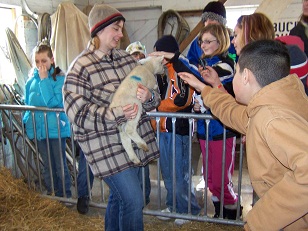
 

Ag Day on May 9th, 2012 at Gilfillan Estate

5th grade Ag Day is set for May 9th, 2012 at Gilfillan Estate

The purpose of the day is to expose 5th graders to a hands on experience of the diversity of agriculture and farming in today’s economy.   Even in our rural communities the majority of these students do not have access to farms and no longer have the opportunity to learn how Food, Fiber, Feed and Fuel are grown, cared for and delivered to our retail stores.

Students from area school districts are invited to attend.  This year we are happy to provide this opportunity to Redwood Valley, Cedar Mountain, Wabasso, BOLD school districts as well as an adopted 5th grade class room in the Twin Cities.   All five of these schools will experience and tour a poultry farm, dairy parlor, cattle feed lot, corn/soybean field as well as presentations from a sheep, alpaca, and pig farmers. And as they learn about the history of Agriculture at the Gilfillan Estate.

The Redwood Area Chamber & Tourism Ag Committee has been offering this program to Redwood Area Schools for 20+ years.  Last year we were able to reach out to 224 students in the local districts.

Corn Capital Innovations believes in the continuation of education and exposing our community to agriculture.  This event is a great step in promotion of production agriculture, and we are happy to support the Ag Committee to continue to offer such programs.

Ag Committee Members include: Joel Mathiowetz, Scott Kodet (HomeTown Bank), Kirby Josephson (Minnwest Bank), Jim Dumdei (Corn Capital Innovations), Pat Hansen (Thrivent Financial), Matt Johnson (Bremer Bank), Caleb Hinkkanen (Titan Machinery), Andy Simon (Titan Machinery), Mike Roach (Pioneer), Kevin Kvistero (USDA), Thor Kaardal (Kaardal Insurance), David Krenz (United FCS), Cori Lecy (United FCS), Jeremy Daberkow (FFA Advisor), Paul Brezina (Monsanto Pre-Foundation), Matt Samyn (Monsanto),  Mike Uhlenkamp (Uhlenkamp & Associates).

Your Field Has Been “Bugged”

Crop monitoring has always been an important part of raising top yields. That’s why keeping day to day tabs on what’s happening in growers’ fields not only protects yields, but supplies reams of information for future use. As farmers get larger and demand for their time increases, it becomes even more difficult, yet imperative, to have someone (or in this case, something else) other than the farmer himself gather the information for them. It’s both difficult and expensive to find someone you can totally trust who is qualified to do the job of crop scouting as accurately and as efficiently as today demands. So news of getting help in that area will be welcomed by most 21st century growers.

Due to the marvels of modern technology, a whole new army of truly professional crop scouts may be on their way to your farm. And who better to inspect your fields than the real professionals who know more about a specific crop than anyone who learned it in a classroom.

Every year, fields are alive with many different species of insects; many of them aeronautical wonders of nature. In fact, with the body shapes and styles that most of them possess, they have no business flying. Take the typical housefly for example. Its wings oscillate at more than 200 times per second making them difficult to hit with a fly swatter and nearly impossible to capture with your bare hand. They don’t look like they’re built to move that fast, but neurological designs inside the fly, which we know little about, allow them to pull it off. As far as flying field beetles are concerned, whoever thought that any of these hard shelled carcasses could get off the ground, let alone stay within any one zip code during a windstorm? But they can fly very well and that’s where our opportunity lies.

According an article written by Michel Maharbiz and Hirotaka Sato in the December 2010 issue of Scientific American magazine, researchers working in the field of micro and nanotechnologies have discovered that by placing tiny cameras on the backs of beetles and other flying insects, they can record everything in the presence of the bug at any time. In fact, according to the article, military and law enforcement departments are particularly interested in this kind of innovation since all they would need to do is release some of these flying television cameras into a room to see what’s going on. For example, they could see immediately how many people are inside, what they look like and if they’re armed. But the best part of all is that with some minor manipulations of the insect’s navigation system, they can also control where the insect goes. This idea will put a whole new meaning to the phrase “Your room has been bugged.”

So just imagine the future where you not only purchase the seed you need, but at the same time you also place an order for hi-tech camera carrying bugs to be released into your fields at periodic intervals throughout the season. They could do a much better job of covering the entire field while accurately reporting exactly what they see every second. Picture yourself releasing a batch of stealthy ladybugs early in the season when the crop is small. Farmers love ladybugs for their voracious appetite because they consume other dangerous plant damaging insects such as aphids, and in doing so, protect the crop. These portable television screens can tell you, for example, when aphids are present. Honeybees could be released into a crop that is getting ready to flower. Who better to take you right to the plants that are most advanced in the field to tell you what stage that crop is in and how many flowers are on the average plant. All of that information would be transmitted to a receiver in your office or to your handheld device, giving you up to the minute status of every field. Sound far fetched? It’s not. The camera bugs are already being tested.

“Camera bugs” are just one of hundreds of new and exciting breakthroughs you can look forward to in the future. And many of those innovations are going to dramatically change the way you farm. That’s why one of our most important jobs at AgVenture is to keep our customers abreast of the latest information that they may not have access to. Our job is to make sure you stay ahead of the game and in the lead, because when you’re in the lead, everyone else gets to follow.

FALL FIELD FURY

Ever heard of road rage? Sure you have. It’s a term used to describe the emotionally generated aggressive and angry behavior of a driver. This conduct can include rude gestures, verbal insults, deliberately driving in an unsafe manner or making personal threats to others on the road. Road rage can lead to altercations, assaults and collisions, which may result in injuries or even deaths. It can be thought of as an extreme case of antagonistic driving or, more accurately, driving without rational, logical purpose.

Rage simply results in loss of control, which is what happens when emotions and tempers flare on the road. Fury, on the other hand, means destructive rage, verging on madness, which better describes what’s been happening in farm fields all across the country this year. We call this Fall Field Fury.

Fall Field Fury occurs when growers unwittingly take their anger and frustrations out on the very fields they just finished harvesting. As with any level of rage, rational thinking is overtaken by thoughtless, spontaneous actions, which are most often diametrically opposed to achieving the desired goal. In the case of road rage, the original goal is to reach your destination but the actual outcome becomes adverse or destructive and may include ending up in a ditch or even jail. In the case of Fall Field Fury, the real objective is to achieve next year’s yield goal, but the result is likely to be anything but that if you lose sight of your purpose and the intended goal.

Many farmers were frustrated throughout the season as they watched their crops get pummeled by every kind of environmental event possible. That kind of frustration was amplified since memories of above-normal yields from previous years were not very far away. All of those disappointments seem to have converged, placing many farmers into a state of Fall Field Fury. That is, they inadvertently began taking their frustrations out on their own fields—including implementing tillage or fertility practices that made no real sense. They began unknowingly damaging their chances of maximizing yields in 2012.

We see farmers using deep ripping, thinking it will solve compaction issues. However, this year is less about compaction and much more about “baked” soils—soils that are very hard and compressed from excessive heat and dry weather. In years when soils are moist, it may have made sense to deep rip soils to break up hard pans, but with soils this dry and hard, the only thing that relieves this baked condition is added moisture and frost. We see anhydrous ammonia being applied at rapid rates with only one thought in mind— getting the fall fertilizer applied before the weather gets bad. Although, applying anhydrous ammonia in these kinds of soil conditions simply cannot be justified.

We see the moldboard plow ever-present in many areas this year. These growers seem desperate, as they want to solve problems in their fields, although they are going about it in the wrong way. As their fathers and grandfathers did, they continue to believe that moldboard plowing kills insects and helps control diseases, but this cannot be used as a yield-building strategy. In highly drained soils like ours, which are already short on moisture, moldboard plowing only makes matters worse. It simply dries the soil out, rather than conserving moisture needed for microbial activity, residue breakdown and erosion reduction. Farmers need to look at and examine their entire crop production system whenever they decide to execute any specific production element.

Many growers are experiencing Fall Field Fury right now. They’re in their fields doing things that will negatively affect their ability to raise top yields in 2012. Rather than focusing on the tactics geared toward raising a better crop in 2012, they are too busy trying to figure out how to get their farming finished and out of way while the fall weather holds.

This is the time of the year when every farmer needs to do two things. First, summarize and analyze everything he learned on the combine this year. Second, match that knowledge with his future yield goal plans. Nothing can derail your real objectives faster than doing things that get you off track, rather than focusing on what it takes to achieve those goals. Make sure to control your emotions this year and don’t let Fall Field Fury affect your plans to raise the best crop you ever raised, next year.

Higher Input Costs? Maybe We Just Need to Change Our Attitudes!

Worried about high input costs? Most farmers are. But why worry about them when you actually have very limited control over them anyways. Instead why not focus on something you can control that will have a major impact on your income as a farmer this next year! Why not raise your corn yield averages high enough to compensate for increases in costs, regardless of how much they go up? In fact, why not double your ROI (Returns On Investment) over the next 3-5 years? How many inputs could you pay for with those kinds of yields and these record market prices? But right now you are probably laughing at the thought of being able to get returns that high on your farm. Well you shouldn’t be. Every bag of seed corn you plant has the capability of producing 500-600 bushels per acre. Why shouldn’t you be raising half of that potential every year?

Read More …

« Previous Page
Next Page »