
Production

Farming in an Evolving Environment

It would be fair to say that we, as humans, over the course of our time on this planet have seen numerous shifts and changes in our environment. While some of these changes have led to the extinction of species, both animal and plant, we, as humans, have been able to adapt very well. In this article, I will refer to some organisms and plants as invasive. However, this may be the incorrect definition by term. An invasive species is; non-native to the ecosystem under consideration and whose introduction causes or is likely to cause economic or environmental harm. I contacted the USDA, as well as the DNR, on the definition with a key question that neither agency could define. What if you have species that are native that no longer die or can be managed with chemistries or technologies that had previously controlled them? Maybe we should just call them super bugs and super plants. Either way, they are definitely NOT super to have in your fields!

Later in this article, I will address some of the invasive species that are causing economic and environmental harm and continue to proliferate in our fields. First, I will present a case study of how profound invasive species are in our environment. To do this, I look no further than one of Minnesota’s most precious resources, water. The state of Minnesota spends over $2 million annually just on the education and prevention of invasive species. Several laws have been put into place to prevent the introduction of both new and existing invasive species from spreading. Current legislation went as far as having to drain all water from your boat and minnow pails before leaving the lake. If you want to keep your bait; by law, you have to have fresh water in your vehicle and exchange the water out. Beyond that, you are also required to have no weeds on or attached to your boat or trailer. If you fail to do this, the possible result in fines could be in excess of one hundred dollars. The DNR will tell you that their campaign against invasive species is 100% preventative. Once invasive species are established, they are almost all but impossible to rid from the lakes and water ways.

The unique battle we face in fields is that we can rid these species once we have them. We can do this through a zero tolerance seed goal, which is physically removing these weeds before they go to seed. Economically, this is the most expensive and labor intensive, but it is the only way once invasive weeds are established. If you have fields that do not have populations of invasive weeds, you still need to continually adapt your spray chemistries and practices that are best suited or effective for elimination of these weeds. After all, these seeds can travel beyond fence lines as the winds blow and the water runs. Again, you cannot control what your neighbors are doing to manage these pests; you can only control how you mitigate the spread of them on your ground.

Our culture does not reward acts of prevention. One can look to our history books for this where there is very little mention of people who have been praised for the prevention of anything. We reward those in both history and our lives who cure or help solve the issues (once they are identified as problematic) that are presented. History isn’t written for the diplomats that have prevented war, it is written for the generals and nations who won the war. Nobody thanks the doctor that has told them for 50 years to eat healthy and exercise regularly; they thank the doctor that cures their ills.
With the wide spread adaptation of technology in farming over the last 20 years, most, if not all technologies have made our lives more efficient in terms of managing a crop. If you have a weed issue, there was a chemical to kill it. If you have a bug problem, there was technology put into the plant to kill it. These technologies have been a simple solution in all but eliminating issues in fields that have historically been a problem. I have observed this for myself on our family’s farm in which the middle of the section always
had a persistent canadian thistle patch. The patch had been there for as long as my father could remember.
Supposedly, my Grandfather met my Grandmother in that very patch via a shared line fence in which it was a common ritual to migrate to every year with a sharp hoe in hand to attempt to eliminate the weeds. While my Grandparents never eliminated the patch, it was always kept in check while it did not cause
an economic hardship for the ground. It did cause many blisters on the hands in the hot
summer days. That thistle patch is now history……….maybe?

While the thistles are gone, there are new challenges. Weeds like giant ragweed
and water hemp are becoming harder to kill. It is estimated that in the 2012 growing
season, 5 – 95% of all fields in Minnesota’s corn growing region have glyphosate
resistant water hemp and giant ragweed! In the southern half of the state, these percentages
increase to 70-95% of fields. As you move north, weeds like kochia and common
ragweed have similar percentages in fields. Corn Root Worn beetles, both Northern and
Western; have become more resilient to technologies and management practices. These
pests are giving corn a one-two punch. It is very important to look at managing these
in both our corn and bean fields, as they are migrating to the beans to lay eggs more
than people want to recognize. These are the invasive species that are adapting to our
environment and management practices at an alarming rate.

We must look to history to recognize that simple is what got us to where we are at in
dealing with these resistant pests and weeds, but simple will not get us out of it. Looking
forward, we must avoid these invasive species (resistance) at all costs because it
will come at the expense of lost revenue in the future. It is, and will always be better to
spend the money to prevent these instances from occurring in your fields than to bare
the economic hardship of trying to eliminate them once they are established.

Looking toward the future, you must ask yourself if you are willing to implement preventative
measures to assure these species do not proliferate in your fields. Will you be
willing to walk your fields 7-10 days after herbicide application to verify an effective
kill? Will you stop the combine before processing the seeds of these resistant weeds?
Will you pull roots and soak them to identify if you have rootworm in each of your
fields to better manage for years to come?
“An ounce of prevention is worth a pound of cure” – Benjamin Franklin
Farming or Spring Training; Both Give You 4 Months to Prepare

Did you realize there are approximately 30 exhibition games before opening day for Major League Baseball teams? Spring training for the players actually begins already in February and I think most fans don’t get as excited about the pre-season as they should!
Spring training is the time needed to allow the players time to “get back into the swing of things” after taking a long season off.  It also gives the managers time to assess each individual player and to work with them on the position that best suits them.

These next four months are just as important to farmers. You have been in off-season since the end of harvest.  The time from now and until you make that first round in the field is the time to make your total farm business solution plan!

We strive to help farmers achieve their goals with our four components of profitability.  As you prepare for the coming season here are some tips to keep in mind.

Production

  • Be sure you prepare and plant when the seedbed is in the best condition.  Dig down 2-4 inches and if the dirt sticks together, it is too wet. If the dirt crumbles it is ready.
  • Plant when the soil is 50 degrees and forecast is good for an increase.

Crop Insurance

  • Work with our team to provide multiple levels of coverage and pick the level that best fits your needs.
  • Ask about a yield adjustment option which allows the county average to be substituted on low yield years.

Grain Marketing

  • Each individual farm and farmer has different expectations; you need to work with the risk you are willing to tolerate.
  • No one can predict the future and there is no standard answer to marketing concerns, we have tools available to keep on top of current prices.

Financial Management and Analysis

  • Creating a business plan is a key factor to understanding where you are financially.
  • We can assist you with weighing the pros and cons of whether to make a major purchase.

We want to be your great hand in farming and would enjoy working with you on “spring training” to get ready for the season!

Contact us today and we will discuss how the four components of farm profitability can positively impact your farm business.

CCI is truly a Great Hand In Farming.  Got a start on the “pre-season”?  Tell us what you have done to prepare in the comments below!

Do You Know The Quality of the Seed You Are Planting?

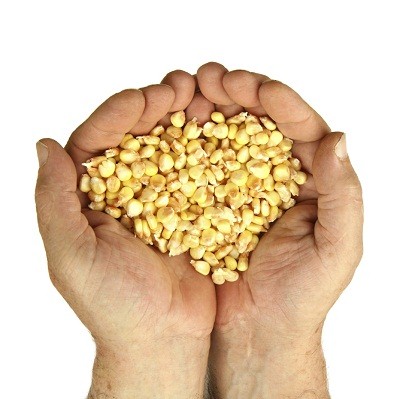
Most farmers look at the bag label for the percentage of warm germination in the seed corn.  By law, this has to be applied to each bag, but often it is not the most important number to know in relation to quality.  The warm germination percentage is significant, however, we have found that cold germination, as well as purity are the actual numbers you need to look at to make better decisions, if and when, you are going to plant that specific variety.

Seed quality alone can equate to 20-50 bushel differences on final yields.  While the industry is not anxious for you to know these vigor results prior to purchasing a product, we feel you need to know everything you can if you are going to achieve your yield goals.   Before you take possession of seed from us you can feel confident that we have run several tests through independent labs to make sure you are getting the highest quality seed available.

Seed quality, both good and bad, is almost always correlated to the environment it came from, is placed in, or the process involved in procuring the product.  Getting high quality seed to the farmers we work with is a variable that we can control.  The processes that we go through to deliver the highest quality seed to farmers is just as important as the process we ask our growers to utilize when taking possession and planting the seed.

When taking possession of the seed.

We suggest that you place the seed in an environment that is void of temperature fluctuations, free of moisture, rodents, and pests.

  1. The rule of 100 applies to this. (60 degrees + 40% humidity)  High temperatures and high humidity can lead to decreased germination and seedling vigor in only a few short months. We recommend using belts versus air systems, to deliver your seed to the planter.
  1. Air systems tend to cause more mechanical damage due to the seed/steel contact while traveling through the tube.

When planting.

We advise waiting to plant until soil conditions are conducive to top yields.

  1. If soil conditions are too wet or dry, loose, lumpy, or in any way less than perfect, it can detract from the seed’s ability to emerge at optimum speed with optimum health.

We suggest planting at 3.8 – 4.2 MPH and at a depth of 2 – 2-1/4” depth.

  1. This will protect the seedling from unwarranted temperature fluctuation and to have all plants emerge within 24 to 36 hours of each other.  The slower you plant, the more consistent and even emerging stand you will have.
  2. Placing the right variety on the right piece of ground is something that we can design into your crop plan.
  3. It’s not just about picking the right genetics; it’s about matching the right germplasms to the right field as 75% of all varieties never preform to their potential because they are planted on the wrong piece of ground.

Being successful completely depends on the quality of everything you do.  From the products you use to the way they are managed, all performance can be traced back to quality.

I encourage you to take a look at your operation specific to quality and ask yourself; are you controlling your quality?  What steps or processes can you change to raise you level of quality from within?

Contact us to work with you to answer these questions, we would be so glad to offer any assistance!

How Fall Tillage Prep Will Affect Your Spring Seed Bed

This video with Scott O’Neill of Corn Capital Innovations will compare 3 different fall tillage scenarios.   All three had corn removed approximately 2 weeks prior to recording.  The field had a Salford RTS, (A vertical tillage tool) run 2 times at 2 opposite directions with a 7 degree angle.  Now, we will compare the final tillage step.

This is what we will look for:

  • Cutting and sizing of residue
  • Where the residue is placed in the soil profile
  • Fracturing of the soils

First Scenario

In this part of the field we used a chisel plow with a 3 bar harrow set at 4”-6”.  Overall the field looks level and will only need a 1 pass in the spring to be ready to plant.  As we dig into the soil, we will find that the vertical tillage along with a chisel plow leaves good structure to the soil as it keeps the residue within the top 1-2” of soil.  This is ideal for a healthy spring seed bed.  As we dig deeper there is little residue and the soil is well fractured, with no sizeable chunks of soil.

Second Scenario

This part of the field was ripped with large covering boards on the rear shanks.  As you will see it has created a little “ridge” at 36” across the back of the tool.  Keep in mind that the corn planter wants a flat sooth playing field to plant into next spring.   Due to the ridging it will be hard to one pass next spring and plant into a uniform seed bed.  If this ground is not worked backed this fall it will provide challenges to next year’s corn crop emergence and consistency.  The challenge with using a ripper with large covering board means as we dig you will find residue incorporated to deeper depths than desired.  The soil structure is different as well and you will have uneven soil temperatures and well as uneven water distribution when working and planting into next spring.

Third Scenario

In the final scenario we used a ripper as well, but no covering boards were on the shanks.  This tool is equipped with a 4 bar harrow on the back to help with the leveling of the soil.  You will also see that using this tool keeps the residue high, due to the lack of the covering boards, as well as the harrow pulling the residue to the surface.  The soil is fractured evenly and will be set up for a one pass and plant scenario next spring.

In closing:

The three different scenarios show how using a vertical tillage tool can change the outcome of what your primary fall tillage tools need to be and how well they work.  The goal is to provide good soil shatter and residue sizing with the vertical tillage tool.  Then follow with your primary fall tillage tool that also keeps the residue high and the seed bed level.  Maintaining soil moisture and structure going into the 2013 growing season will be paramount as we are very short on sub-soil moisture.

Remember the two main points are the cut, size, and location of your residue and good fractured soil.  If you keep it level and even, you will be a better corn farmer, bar none!

How to Stop Worrying about Hitting the Highs and Lows of Farming

We wanted to share this great story from Colleen, a farming friend originally from near Clarkfield, MN who now lives in the Redwood Falls, MN area.

Growing up on a family farm was a wonderful experience and my Dad made an excellent investment by buying land, and as he would say, “making a living off the land”.  Farming was in his blood as he came from a long line of farmers.


We had a quarter section and it was enough with the size of equipment that he had.  There was no GPS or automation at that time.  Some say the good old days and I have to agree!   However, he was always with the times and understood the changes that made sound sense.  He would store grain and wait for the market to go up.  Us kids were not really informed of the “financials or the marketing” that the old man did.  That was kept for Mom and him to worry about.  When the 80’s hit I don’t think that I realized just what a bad situation we were in; farming at that time.  But, the evolution of time changes it all.  The land that he bought for just over $200 an acre (a lot of money in the 60’s) is now selling for around $6,500 an acre.  Depending on your location, land could be selling for a whole lot more!

Dad would listen to the radio and get the news on corn and soybean prices; that was the old style of grain marketing. Don’t get me wrong, we still listen to the radio, but now we have an organization like Corn Capital Innovation that is the pioneers in the field of providing a total farm business solution.

They boast the phrase “we change farmer’s lives forever” and it is true!  I wonder how things would have been different ‘back in the day’ if we had this resource to turn too?!

So take advantage what we have now and contact Corn Capital Innovation for assistance with Production, Crop Insurance, Marketing and Financial Management.

Grain Marketing is the most difficult job every grower will face.

Working with Corn Capital Innovation’s assistance you will:

  • Achieve goals faster
  • Adjust to market changes
  • Gain a competitive advantage
  • Rest easier

The most successful farmers utilize grain marketing specialist to help them make decisions.

Check what you already have in place:

__I know how to tie grain marketing with crop insurance

__I know how to use storage in my profitability strategies

__I know what financial changes I need to make in my operation each year

__ I know my break-evens

__ I know my working capital percentage and how to increase it

__ I understand market carry and how to apply it

__ I understand and know how to manage profitability and basis

Stop worrying about hitting the highs and lows… Increase profitability more than you ever thought possible!  Do this with the assistance of Corn Capital Innovation.

Contact Us today and we’ll help you put the four components of farm profitability to work!

« Previous Page
Next Page »