

Top Questions and Concerns About Crop Insurance and the Answers You Need

Every year around this time we review and plan our crop insurance needs for the March 15th deadline.  It’s important to know and understand how history, trends and other factors can influence the planning process.    Here are a few of the top questions and concerns you may be asking as you prepare for 2013.

Questions that are arising from 2012:

  1. What will the drought with the high number of payouts do to my premiums?

Crop insurance is not the same as auto insurance and claims paid out will not automatically raise your premium.  It is county and state rated over a 25-year period.  In fact expect 2013 to be about the same as 2012 or it may even decrease slightly

  1. How will the Farm Bill and Government affect insurance?

By January 1st the bill was already intact so no changes are expected.  In fact expect it to be intact until 2014.

Seasonal Market Trends

Trends follow three peaks: Spring, Summer and Fall.  “Crop year 2013 is like 2012 on steroids” says Deb with Water Street Solutions (LINK).  “No two years are alike, even if you have the same weather, you will not get the same results (agronomically speaking).”  What influences markets?

  • SPRING = Acres in the ground, supply and demand, conditions
  • SUMMER = Heat stress, weather, drought
  • FALL = Price drops or price increases

Crop Insurance – Crop Protection

You will need to decide how many bushels you are willing to invest, to insure your entire crop.

Options:

  • Revenue Protection
  • Production Protection
  • Named Peril Insurance, more than just hail coverage it can include fire, lightning, vandalism etc.
  • Add endorsement to cover additional, such as green bend or green crimp & greensnap with extra harvest expense

When we are going into a higher commodity price in the Spring, we recommend higher coverage.  We would welcome the opportunity to sit with you individually and base your coverage on your specific farm and your needs.

Don’t forget the deadline is March 15th so give us a call today at 320-523-2252 and we can help you get the protection you need for your peace of mind.

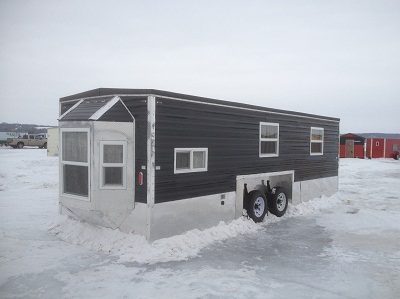
Farm Fishing Report Weekend of January 26th

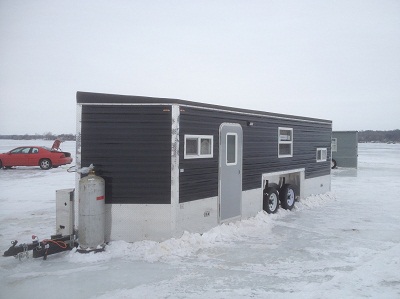
Fishing this weekend was again slow.  I was able to find a few crappies.  Many of you have been asking where I’ve been fishing.  Well this location is tough to describe so I’ve taken a few pictures of the exact location.  Here it is!!!!!!!


West Central Tribune Interview: After Mechanization, Technology Changed Ag Industry

Steve O’Neill, Chief Executive Officer and owner of Corn Capital Innovations, was very honored to be recently interviewed by Tom Cherveny of the West Central Tribune in Willmar, MN.  During the interview Steve discussed how Corn Capital Innovations is part of a ‘third revolution’ within agriculture.

First was mechanization then came technology.  With the two combined you will find the four components of profitability: Production, Crop Insurance, Grain Marketing & Financial Analysis.  We specifically tailor these 4 components to each individual farming operation.

Our goal is to get all of the components of the plan working together to maximize your return on investment!  Steve explains this further in the interview:

Every farmer wants to know; what is the one thing that will have the biggest impact on profitability. ”The answer to that is there is no one thing,’’ says Steve O’Neill, founder and president of Corn Capital Innovations in Olivia.
There are many things, and that is why O’Neill launched this fast-growing company, one he believes is part of agriculture’s third revolution.

Read the entire article on After mechanization, technology changed ag industry, area business starts third revolution published in the West Central Tribune on Monday, February 4, 2013.

Farming or Spring Training; Both Give You 4 Months to Prepare

Did you realize there are approximately 30 exhibition games before opening day for Major League Baseball teams? Spring training for the players actually begins already in February and I think most fans don’t get as excited about the pre-season as they should!
Spring training is the time needed to allow the players time to “get back into the swing of things” after taking a long season off.  It also gives the managers time to assess each individual player and to work with them on the position that best suits them.

These next four months are just as important to farmers. You have been in off-season since the end of harvest.  The time from now and until you make that first round in the field is the time to make your total farm business solution plan!

We strive to help farmers achieve their goals with our four components of profitability.  As you prepare for the coming season here are some tips to keep in mind.

Production

  • Be sure you prepare and plant when the seedbed is in the best condition.  Dig down 2-4 inches and if the dirt sticks together, it is too wet. If the dirt crumbles it is ready.
  • Plant when the soil is 50 degrees and forecast is good for an increase.

Crop Insurance

  • Work with our team to provide multiple levels of coverage and pick the level that best fits your needs.
  • Ask about a yield adjustment option which allows the county average to be substituted on low yield years.

Grain Marketing

  • Each individual farm and farmer has different expectations; you need to work with the risk you are willing to tolerate.
  • No one can predict the future and there is no standard answer to marketing concerns, we have tools available to keep on top of current prices.

Financial Management and Analysis

  • Creating a business plan is a key factor to understanding where you are financially.
  • We can assist you with weighing the pros and cons of whether to make a major purchase.

We want to be your great hand in farming and would enjoy working with you on “spring training” to get ready for the season!

Contact us today and we will discuss how the four components of farm profitability can positively impact your farm business.

CCI is truly a Great Hand In Farming.  Got a start on the “pre-season”?  Tell us what you have done to prepare in the comments below!

Do You Know The Quality of the Seed You Are Planting?

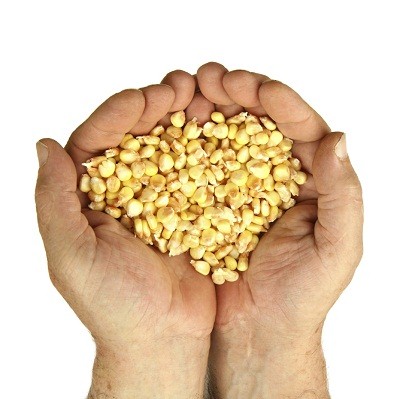
Most farmers look at the bag label for the percentage of warm germination in the seed corn.  By law, this has to be applied to each bag, but often it is not the most important number to know in relation to quality.  The warm germination percentage is significant, however, we have found that cold germination, as well as purity are the actual numbers you need to look at to make better decisions, if and when, you are going to plant that specific variety.

Seed quality alone can equate to 20-50 bushel differences on final yields.  While the industry is not anxious for you to know these vigor results prior to purchasing a product, we feel you need to know everything you can if you are going to achieve your yield goals.   Before you take possession of seed from us you can feel confident that we have run several tests through independent labs to make sure you are getting the highest quality seed available.

Seed quality, both good and bad, is almost always correlated to the environment it came from, is placed in, or the process involved in procuring the product.  Getting high quality seed to the farmers we work with is a variable that we can control.  The processes that we go through to deliver the highest quality seed to farmers is just as important as the process we ask our growers to utilize when taking possession and planting the seed.

When taking possession of the seed.

We suggest that you place the seed in an environment that is void of temperature fluctuations, free of moisture, rodents, and pests.

  1. The rule of 100 applies to this. (60 degrees + 40% humidity)  High temperatures and high humidity can lead to decreased germination and seedling vigor in only a few short months. We recommend using belts versus air systems, to deliver your seed to the planter.
  1. Air systems tend to cause more mechanical damage due to the seed/steel contact while traveling through the tube.

When planting.

We advise waiting to plant until soil conditions are conducive to top yields.

  1. If soil conditions are too wet or dry, loose, lumpy, or in any way less than perfect, it can detract from the seed’s ability to emerge at optimum speed with optimum health.

We suggest planting at 3.8 – 4.2 MPH and at a depth of 2 – 2-1/4” depth.

  1. This will protect the seedling from unwarranted temperature fluctuation and to have all plants emerge within 24 to 36 hours of each other.  The slower you plant, the more consistent and even emerging stand you will have.
  2. Placing the right variety on the right piece of ground is something that we can design into your crop plan.
  3. It’s not just about picking the right genetics; it’s about matching the right germplasms to the right field as 75% of all varieties never preform to their potential because they are planted on the wrong piece of ground.

Being successful completely depends on the quality of everything you do.  From the products you use to the way they are managed, all performance can be traced back to quality.

I encourage you to take a look at your operation specific to quality and ask yourself; are you controlling your quality?  What steps or processes can you change to raise you level of quality from within?

Contact us to work with you to answer these questions, we would be so glad to offer any assistance!

« Previous Page
Next Page »