Corn Capital Innovations

How Did You Make Your 2012 Decisions?

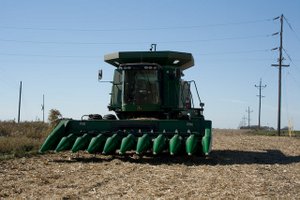
The last 40 days have been a flurry of reaping the harvest.  Now is the time to review the decisions you made along with finalizing your 2013 cropping plans.

How did your yields respond this season on your ground and your growing environments? Did it match what you anticipated it to be at the beginning of the season? Sometimes we are all quick to react when the reality of the year did not meet our expectations or when final yields exceed our expectations?  The questions you must ask yourself is am I making decisions on concreted evidence for the next growing season that coincide with your 3-5 year yield goals, or are you reacting in the face of emotion? The two must be separated to make beneficial decisions.

We have analyzed the numbers on 200 different combines based on variables such as:

  • Different planting dates
  • Nitrogen
  • Seed selection
  • Residue from previous year
  • Plant population
  • Tillage
  • Fungicide application
  • Soil environment
  • Rain fall amounts

We ride combines each fall to gain the knowledge on how each specific field fared throughout the year and what type of environment was provided in each field to obtain the results that will determine your profitability. As we have received a large array of performances, what we are seeing is that it still comes down to dividing total bushels by acres to come up with realistic yield information. By reviewing the results of specific field APHs you’ll be better able to gauge if the yields are coinciding with where you need to go to increase yield levels across the entire operation.

Because we were faced with so many variables this year we found that it’s highly important to use good concrete yield data, versus 19th century production strategies of using weigh wagons to dictate your success.  The weigh wagon’s inaccuracies were proven in a year with so much variability within each field as well as variability across field locations.

It turns out that 2012 was not as bad as expected as some acres produced average and some above average yields just miles from each other.  The weather events played an obvious role in the variability of the 2012 crop. Based off of timing of the rain, wind, etc. some yields came in below expectations. The key factor to look at was that the challenges didn’t stop with just one event.

With 2012 behind us we need to be proactive for the upcoming year. Instead of looking back at what could have been, look at what we can control next year in the face of adversity. The year started out with the potential of above average yields and had Mother Nature cooperated, yields would have been even better.  Remember, we can’t control Mother Nature; we can only minimize the extent of the variables that she throws at us.

Now is the time to put together your cropping plan for 2013.   We will work with you to lay out a step-by-step plan specifically for your operation.  A solid plan will assist you for 2013 and beyond.  Let us help walk you through the variables you can control!  Contact us today at 320-523-2252.
How Fall Tillage Prep Will Affect Your Spring Seed Bed

This video with Scott O’Neill of Corn Capital Innovations will compare 3 different fall tillage scenarios.   All three had corn removed approximately 2 weeks prior to recording.  The field had a Salford RTS, (A vertical tillage tool) run 2 times at 2 opposite directions with a 7 degree angle.  Now, we will compare the final tillage step.

This is what we will look for:

  • Cutting and sizing of residue
  • Where the residue is placed in the soil profile
  • Fracturing of the soils

First Scenario

In this part of the field we used a chisel plow with a 3 bar harrow set at 4”-6”.  Overall the field looks level and will only need a 1 pass in the spring to be ready to plant.  As we dig into the soil, we will find that the vertical tillage along with a chisel plow leaves good structure to the soil as it keeps the residue within the top 1-2” of soil.  This is ideal for a healthy spring seed bed.  As we dig deeper there is little residue and the soil is well fractured, with no sizeable chunks of soil.

Second Scenario

This part of the field was ripped with large covering boards on the rear shanks.  As you will see it has created a little “ridge” at 36” across the back of the tool.  Keep in mind that the corn planter wants a flat sooth playing field to plant into next spring.   Due to the ridging it will be hard to one pass next spring and plant into a uniform seed bed.  If this ground is not worked backed this fall it will provide challenges to next year’s corn crop emergence and consistency.  The challenge with using a ripper with large covering board means as we dig you will find residue incorporated to deeper depths than desired.  The soil structure is different as well and you will have uneven soil temperatures and well as uneven water distribution when working and planting into next spring.

Third Scenario

In the final scenario we used a ripper as well, but no covering boards were on the shanks.  This tool is equipped with a 4 bar harrow on the back to help with the leveling of the soil.  You will also see that using this tool keeps the residue high, due to the lack of the covering boards, as well as the harrow pulling the residue to the surface.  The soil is fractured evenly and will be set up for a one pass and plant scenario next spring.

In closing:

The three different scenarios show how using a vertical tillage tool can change the outcome of what your primary fall tillage tools need to be and how well they work.  The goal is to provide good soil shatter and residue sizing with the vertical tillage tool.  Then follow with your primary fall tillage tool that also keeps the residue high and the seed bed level.  Maintaining soil moisture and structure going into the 2013 growing season will be paramount as we are very short on sub-soil moisture.

Remember the two main points are the cut, size, and location of your residue and good fractured soil.  If you keep it level and even, you will be a better corn farmer, bar none!

Fantasy Farming – The Seed Dream Team

The smell of fall is in the air and that means two things- football and harvest. Many of you are also excited to have kicked off the fantasy football season. With 30 million people having their drafts over and teams picked, you hope for the best this football season to win that large pot of cash at the end.

For some reason, it seems that no matter how much you know about the NFL football players and their stats from their previous season, what can seem like a perfect pick before the season starts, one small factor can throw everything off. Accurate, high-quality fantasy football projections are difficult to make, mostly because there are too many variables involved that can make or break a season. What can be even more frustrating is your competition picks their winning team based off the uniforms and their favorite colors and win! How does this happen? How can a plan that seems so perfect by looking off of performance last year flop on the ground?

We see this same thing year after year when farmers put together a crop plan that seems to be the seed dream team based off of their yields from the current season and what new rookie has the most hype as a new player. What we need to remember is that there are no two growing seasons alike, just like there are no two football seasons that are the same. There are numerous factors that go into play for a successful season- this is why we see such varying results from harvest to harvest and from field to field. We are seeing more volatility in the farming industry more than ever before, so it is not uncommon for us to be looking for the perfect answer on how to grow a great crop.

The perfect answer doesn’t lie within the perfect seed variety, but what it takes to consistently get better and have the best chance at earning the largest pot of money in the end is management and execution.  Just as it takes a great manager to form a great football team, skill alone won’t win it. We can’t control the weather, market prices and adverse growing seasons. But what we can control is how we plant the crop, manage the crop and execute strategies, which in turn spreads our risk. No matter what happens after that first kickoff is made, is it up to the grower to finish the year strong and do everything in his power to go after the big win. Even though this is not a foolproof solution, it is still the awareness of your management practices and the drive to be better that will have the largest long term impact on your operation.

As we have watched things gear up for this special time of the year, there has been much anticipation to see what the performance actually looks like. Everyone has seen their fair share of bumps in the road, but every team depends on the manager to guide them in the right direction, and it’s his job not to give up after the star player gets hurt. You know there is more potential in a team when he has the ability to look at the different strengths of each of his players and makes management changes as he needs to throughout the season to get the team to perform to the best of their ability through the end. After so long in the league, different variables start to take effect and the game starts to wear on each player. Same goes for the lifespan of a hybrid. In the past we used to see a certain kind of seed on the market for decade, now that lifespan has decreased to an average of a couple years in the field before it’s taken off the market. Change is inevitable and players will come and go. It’s up to the manager to make adaptations needed to move forward and continue to grow. What experts are you listening to as you create your 2013 game plan?

Maize May Fight Hepatitis

Researchers led by Hania Elitriby, director of Cairo’s Agricultural Genetic Engineering Research Institute have genetically engineered maize plants to produce a protein used to make the hepatitis B virus vaccine, SABC News reports.  They hope their findings could eventually lead to a local, inexpensive and edible vaccine.  The plants produce the protein which elicits an immune response against the hepatitis B virus.  The scientists are now attempting to increase the amount of the progestin produced by the plants. Testing the vaccine in animals and humans started in 2011.  More than a billion people are infected with hepatitis B, and about 350 million of these are at high risk of serious illness and death from liver damage and liver cancer.  Edible vaccines produced by plants would be cheaper and would not need to be refrigerated.
This is the future for farmers.

-Source Ag Bio Tech Reporter

Clear Your Mindset from 2012 – 2013 Will Be Different

The 2013 Farming Season is already here, do you believe your combine is your first tillage pass for fall tillage in the preparation for spring?  We do!

Everything you do, right now, this fall, will impact your season for next year.  We feel the road map to success is being prepared.  Even before you combine, having a crop plan in place is the most important part of your future.

Your plan:  Consider what expectation you had going into this 2012 season.  Now that it is at the years end what you accept or don’t accept with in those expectations is how you will feel going into 2013.  Will you go into the New Year feeling positive about the 2013 crop?  Here a few possible expectations for next year’s crop.

  • Another year of drought, wind, & hail

OR

  • Weather you can work with and the potential to grow your best yields ever.

Make sure that your plan includes Risk Management, Grain Market Protection, and Crop Production.  Make sure you are in the game, ready with no surprises.  Don’t be left out of the game with many surprises, they can be expensive!

You have to expect the unexpected; after all you can’t predict Mother Nature.  So go into 2013 with a clear mind, be flexible and remember it is better to re-educate yourself on the things that are available to you (crop production, crop insurance, grain marketing, financial analysis)  versus to re-assume the decisions that you made.  Stay ahead of the curve and surround yourself with people that are positive and working with your to hit your yield goals.  You have to have a crop production plan that is based on growing the best crop possible.  Your risk management plan is for protecting against the worst case scenarios that Mother Nature will throw your way.

Contact Us or call 320-523-2252 to find out all that we can assist you with for the remainder of this year and of course 2013 as it is already upon us!

« Previous Page
Next Page »