Corn Capital Innovations

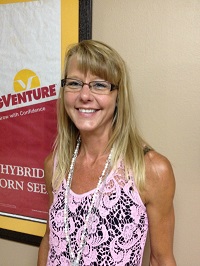
Diane Amberg Joins Corn Captial Innovations as Crop Insurance Technician

Diane AmbergDiane Amberg is a Crop Service Technician at Corn Capital Innovations in Olivia, Minnesota.  She will be assisting the Crop Insurance Specialist in handling applications forms, claims, and following up with customers. Diane is a strong believer of true customer service and very passionate about people.  Building strong customer relationships and maintaining those relationships with honesty and integrity is the key to her customer service.

Diane was raised on a farm near Belview, MN where her parents raised livestock and farmed soybeans, corn, and sugar beets.  Diane is passionate about rural Minnesota and has lived in the area all but two years of her life.  Her career in administration started with Minnesota Technology working with manufacturing companies in rural MN to help improve the economic impact in rural communities.  Diane also served as administrative assistant for Minnesota Rural Partners which was located in the same office building as MN Technology. Due to state/federal budget cuts, the office in Redwood Falls, MN was closed and Diane went on to work for Altimate Medical, Inc. as their Quality Documentation Controls for a year.  Seeking more interaction with people, Diane started a new venture when hired by Monsanto Production in Redwood Falls.  She served as the shipping administrator for a number of years and by the time her stint was over there, she had done accounts payable, served as backup for payroll, assisted with harvest reporting, completed field inspections, and assisted with mapping. Diane has had numerous part time jobs at a variety of businesses and was also in direct sales for a couple of years.

Diane joins Corn Capital Innovations with a knowledge in manufacturing, farming and business.  She has two sons (of which she is very proud) that are employed in the ag industry and enjoys any opportunity to be able to spend time with them and other family.  Diane enjoys being outside (except in the cold months) doing just about anything, likes to read a good book when time allows, enjoys walking, cooking, and of course, now working for Corn Capital.

Join us as we welcome Diane into our growing company!

Should Your Corn be Knee High by the Fourth of July?

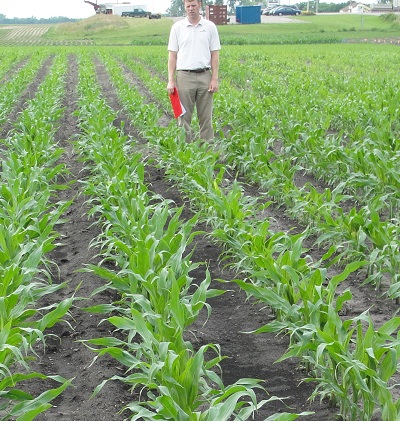
STEVEThe Farmer’s Almanac used to predict that if corn was knee high by the Fourth of July, it would be a bumper crop.  That was a way of measuring, back in our Grandpa’s day.  This year we did our planting “back in time”, so will you go back in time to gauge your success next month?

Of course, you have to take into consideration that this rule was created long before fine-tuned hybrids, high-octane fertilizers, fungicides, herbicides and even irrigation systems that are now part of farming.  Nonetheless, I think we all have that phrase engrained in our memories.

Over the years, we have forgotten about knee high and have based it on “high as an elephant’s eye”.  But don’t forget that we should not base our expectations on what happened last year, but on the average over the past 20 years.

As of right now, Renville and Redwood Counties in MN are really in good shape, and we can expect a leaf of growth every day – to day and a half!  With that said, we are right on track to be knee high by the Fourth of July!  We are actually right where we need to be.

It is this time of year that we reflect back on last fall:

  • Did we do everything that we could have to prepare for the scenario that Mother Nature dealt us this spring?
  • Did we buy the correct seed and plant it at the best depth and speed to maximize growth potential?
  • Is our post-planting plan set to enhance the field conditions today?

Every decision we made after harvest until now; will show if what we have done is correct.  We believe that as long as every farmer keeps an eye on the conditions, adjusts accordingly to those needs both now, and throughout the growing season, we will not have any surprises come harvest time.

Tell us your prediction for your fields; are you on track for knee high by the 4th of July or even better?

Meet Our Corn Capital Innovations Intern for 2013

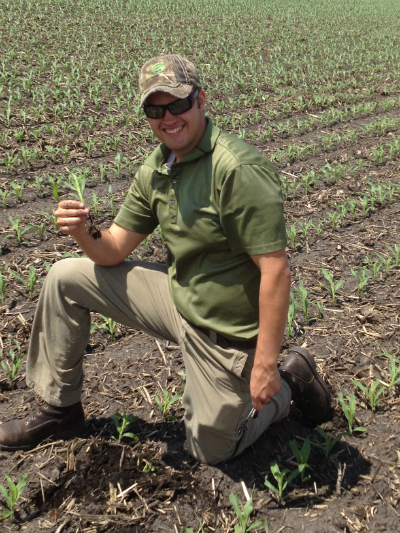
Reed NelsonMy name is Reed Nelson, I will be the intern for Corn Capitol Innovations for the summer of 2013.  I will be a junior in college this fall where I am currently pursuing a degree in Business Marketing from St. Cloud State University.  Having lived in Olivia, Minnesota for nearly 21 years of my life, I have developed a strong interest in agriculture and the businesses which make Olivia and the surrounding communities thrive.  I enjoy playing guitar, hunting, fishing, and being outdoors in my free time.

In the first month of my internship, I have participated in conducting Net Effective Plant Stands which are commonly referred to as NEPS.  This process is a tool that is not only used to determine the success rate of a growers spring planting, but also show how decisions made in the previous fall, winter, and spring have affected the farming process.  The NEPS process involves flagging and analyzing portions of growers’ fields.  The flagging process involves identifying individual plants and determining whether they are: standards, skips, double plants, or a delayed emergence.  After completing the flagging process, the next step is identifying the cause of the delays, skips, or doubles.  This step is often carried out by digging to check for soil conditions, and planting depth.  These complications can range from poor soil conditions, to weather related conditions, to malfunction of machinery used.  By diagnosing these problems, we are then able to assess decisions made in the months prior to planting and how they may or may not have played a role in problems with stands.

Once Net Effective Plant Stands are complete, the rest of my summer will include activities such as scouting fields for harmful insects and fungi.  I will also gain experience through observing varieties in our plots and learning more about the genetics involved in various seed products.  With the summer just beginning, I am excited to expand my knowledge of agriculture through hands-on experience with the C.C.I. team.  I also look forward to meeting and working alongside the customers of Corn Capital Innovations to help accomplish a safe and successful growing season.

We are pleased to announce the Corn Capital Innovations Scholarship recipients for 2013!

“A Great Hand in Farming” Ag Scholarship
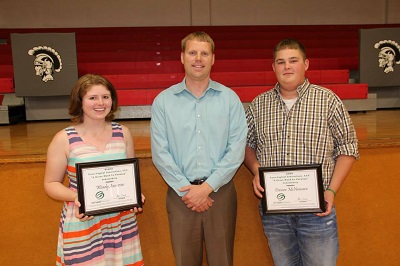
scholarship winnersThis scholarship is a contribution to the youth of rural areas who are inspired to seek opportunities in agriculture. We feel agriculture surrounds us all in some way either directly or indirectly and we want to help individuals become successful in their agricultural goals.  Our 2013 scholarship recipients are:

Wendy Anderson
$1,000 “A Great Hand in Farming” Ag Scholarship

From: Bird Island
College Plans: Augsburg College
Major: Music Business

Goal: My goal is to be successful.  I want to make my parents proud and make them feel like they succeeded in raising me.  I want to have a career that I love and enjoy and that can also change someone else’s life in some way, shape, or form.

What community or school activity has been the most meaningful: I have been in 4H for 13 wonderful years of my life.  Without this program, I would be nothing.  I probably would not have developed efficient interviewing/speaking skills.  I also would not have been able to work with different age groups, young and old, and be able to bond with them by helping them with 4H projects or fun activities.  4H has given me skills that I will need in the future.  4H exists to create leaders in this world who use their head, hearts, hands, and even their health to guide them in a successful direction.  I have gained so many connections throughout this organization.  In all honesty, I probably would not have been in an organization like FFA, which has strengthened my skills even further, if I had not been in 4H.  The people I have interacted with in 4H have inspired me to be the best that I can be.  I will use the skills I learned to help further me in the world of business in order for me to interact with others to successfully complete the task at hand.  I have been dreading the day in which my membership in 4H will come to an end, but I hope to be able to be involved with the organization when the time is right.

Connor McNamara
$500 “A Great Hand in Farming” Ag Scholarship

From: Bird Island
College Plans: NDSU
Major: Agronomy

Goal: My goals in life are to attend and graduate college at NDSU in Fargo with a degree in agronomy.  I will later use my degree to its full potential and help out my local agricultural community.  My lifetime goal has always been to come back and run the family farm with my family and be successful at everything that I do.

What community or school activity has been the most meaningful:  The organization that has left the biggest impact on my personal and career development would be FFA.  FFA has taught me that hard work and dedication really does pay off. Over the years, I have participated in several events in the local FFA chapter.  One of these events that I really enjoyed was the pancake breakfast.   Waking up early in the morning and serving the community breakfast was well worth the loss of sleep and a whole lot of fun!


Andy McNamara Memorial Scholarship
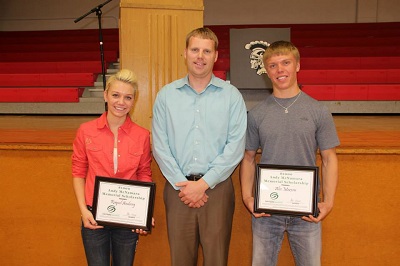
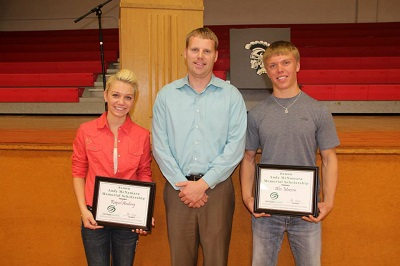
McNamara Scholarship winnersThis Scholarship is in memory of Andrew “Andy” McNamara, a Renville County farm boy who had the desire to be involved in production agriculture. He thoroughly enjoyed the outdoors and was concerned for the environment. Andy is missed by all those who knew his real passions.  Our 2013 scholarship recipients are:

Alec Marxen
$2,000 Andy McNamara Memorial Scholarship

From: Bird Island
College Plans: University of Wisconsin – River Falls
Major:  Agricultural Business

Goal:  I plan to start a career in the agriculture industry in the Bird Island area that provides me with opportunities to advance to a management/supervisor position.  I also plan to take over my family’s farm when my Dad retires.

What community or school activity has been the most meaningful:   I feel that FFA has been the most meaningful to my personal and career development.  FFA gave me the opportunity to further my knowledge about agriculture and better my public speaking skills which will be both instrumental since I am pursuing a career in agriculture.  FFA also involves lots of volunteer work and fundraisers which I feel are very important because these things require dedication and commitment while giving me an opportunity to give back to the community.  FFA has also created relationships that I feel will last a lifetime.

Raquel Amberg
$1,000 Andy McNamara Memorial Scholarship

From:  Bird Island
College Plans: South Dakota State University – Brookings
Major: Agri-Business

Goal: My goal is to go to SDSU and finish my 4 years of education there.  I plan to major in Agri-business and minor in wildlife and fisheries.  After I finish my education, I hope to come back to Olivia and help my Dad farm and soon take over the family farm.

What community or school activity has been the most meaningful:  The most meaningful things are my Dance Team and FFA.  My Dance Team is like a family and we stick together.  Dance is something that I can do to get my stress out.  It is something I have a love and passion for.  Dance has made me learn how to become a leader and a role model.  FFA is going to help me develop my career because it is teaching me things I need to learn for what I want to do.  FFA is also really fun.  It’s good to have fun while you’re working and with FFA you can work, learn and have a blast.

Drone Farming

What is your first thought when you hear the word drone? If you are like most Americans and follow any sort of mainstream media, your first thoughts probably migrate to the military’s use of these vehicles for surveillance or even running bombing raids in foreign countries. Law enforcement agencies are also beginning to utilize the use of drones in surveillance of rural areas, namely public grounds, in search of illegal operations in the drug trade.

The Unmanned Arial Vehicle’s (or simply UAV as defined by the military) biggest potential in agriculture is the aerial images and data acquisition that can be obtained at a much lower cost than traditional forms that have been utilized in the past.  When we look to the future of farming specific to technology, one must always look at what our military is using.

More times than not, the technology that we have to utilize on our farms are a direct descendant of research and development in our military. When the Russians entered space in 1957 with the first satellite, Sputnik I, the space age began.  This triggered major investments by the U.S. military in technologies that ushered in a new era of scientific discovery and development. The Global Positioning System (GPS) was developed in the 1970’s, became available to the public in the late 1980’s, and currently is utilized numerous times a day on several different platforms by the American public.

If you were farming in the 1950’s, would it ever have occurred to you that an event such as the Sputnik I would lead to having sub-inch accuracy while planting a field in which the tractor would steer itself?
Drones have come under scrutiny recently in the states by groups such as the American Civil Liberties Union in regards to their use and their possible infringement on people’s privacy. Google’s CEO, Eric Schmidt, has entered the foray in stating that “the use of cheap, miniature, “everyman” drones need to be banned by international treaties before such devices fall into the hands of private users including terrorists.”
Why all the attention on drones? A federal law mandates that the Federal Aviation Administration open up
the national airspace system by 2015. By doing so, it will present the opportunity for people to not only purchase, but to also utilize drones for commercial use. Currently, it is against the law to use or fly a drone as the airspace is controlled by the FAA.

In a study released by the Association for Unmanned Vehicle Systems International (AUVSI), they predict that from 2015 to 2025, the UAV industry could produce up to 100,000 new jobs and add upwards of $80 billion in economic activity. Michael Toscano, CEO of AUVSI, has stated that “eighty percent of utilization of Unmanned Aircraft Systems will be used in precision agriculture.”  These are jobs and technology that can be added to the economy while not replacing human capital. While the uses remain limitless, if this technology is utilized and creates simply a 1% increase in output in agriculture in the United States, we are looking at adding billions of dollars into the economy. It is my belief that these tools will lead to more accurate and timely decisions in producing a crop.  The level of education and understanding in how to treat a crop is paramount from the air. After all, a bird’s eye view of your fields is the quickest way to see and interpret if you need to take action in your production strategies.

“…a bird’s eye view of your fields is the quickest way to see and interpret if you need to take action in your production strategies.”

Japan has used drones since the early 1990’s in their rice production. Several countries that are our biggest competitors (namely South America) are also utilizing drones for agricultural production. While the technology is here today, we may actually be the laggards in the world community in the utilization of drones. The use of drones has the potential of changing the way we farm. The only thing in the way of their wide spread utilization is the passing of legislature by the federal government in allowing the private industry to use this
technology for widespread adaptation to agricultural production strategies.

« Previous Page
Next Page »