2012 Observations from the Combine

When the 2012 crop year started last fall, there were many challenges that were facing the crop 6-8 months before it was even planted.  Most of the challenges were derived from the weather or lack of weather specific to rain.  There were many changes made to tillage programs last fall in dealing with ground that was less than ideal for preparing for the 2012 crop.  Farmers were up to the challenge to prepare an environment in each field that would give them the best chance at producing their best crop for 2012.  Last winter we spoke of how climate is what we expect, weather is what we get, and the environment is what we make of it.  While there are numerous examples of what weather did to your 2012 crop, I will focus specifically on the environment of each field.  I will also discuss how different management practices altered the environment to attain results that lessened the impacts of incremental weather events.

1.  Changes made during fall tillage (or the lack of changes) had a large effect on soil conditions at planting.
Keep the clods out of the field and keep the residue high and sized.  Fall tillage scenarios in which growers adjusted their equipment to work shallower than normal to keep the soil structure intact kept the ground level while sizing residue, as well as, fracturing the soil to keep the rough clods at bay.  By keeping the soil profile intact, the planter was able to plant the crop into a very level seed bed.  The residue remained high for the row cleaners to do their job on the planter as well.  Even the slightest amount of residue in the seed trench this year caused delayed emergence do the environmental factor of taking a soil profile void of moisture and putting air (residue) next to the seed.

2. Planting date was once again irrelevant.
The old adage of planting early to obtain high yields was once again not seen as we rode machines this fall.  Yes, sometime planting early can be advantageous, but top growers always keep in mind that it is the soil conditions at planting time that are the most important factor to producing a top crop, not planting date.

3.  Establishing a high ear count was not a challenge due to ideal planting conditions, keeping a high ear count from adverse weather was the #1 challenge that was faced this year.
As stated above, the planting date was irrelevant to final yields.  What was relevant was the action taken by growers who faced weather perils early in the year.  The effect of a pounding rain on emergence was seen across a wide area.  Those that took action and utilized a rotary hoe to help get as many full ears out of the ground were paid huge dividends on final yields.  Those that took action in mid-May as the country side turned black with dust from high winds to keep their crop from being set back by sandblasting had a better chance at producing greater yields than those that did nothing.

4.  The effects of early season nitrogen applications, as well as, starter fertilizer provided an environment that alleviated stress going into pollination.
In fields where both were applied, the kernel set was outstanding.  The plants demand for nitrogen and phosphorus at pollination are at their greatest need.  Making sure the plant was fed correctly early in the growing season helped establish a root system that could handle the stresses that were endured during pollination when the plants focus turns to a reproductive state.

5.  The focus on bushels per thousand plants instead of plant populations tells the tale of how management and weather affected this years crop.
On average (whatever average is) a corn plant will produce approximately 6 Bu per thousand plants.  What we saw on combines was a wide variance in what the final number was.  We saw ranges of 4 bushel per thousand to 7.25 bushels per thousand across all varieties and fields this year.  What were the key factors in producing such a wide difference in the outcome of these yields?  The obvious answer is weather.  Whether it was early pounding rains or areas where we went 8 weeks without rain, in some instances both were the case for the same field.  While the water or lack of water played a role, the differences emerged in how the ground was set up last fall, how well it was planted, and the mindset of the grower to focus on the right agronomic differences to provide a different outcome in the face of the same weather.  In areas where wind events caused the lodging or flattening of the crop, we saw what the loss of the photosynthetic factory did in reducing the plants ability to fill the cob, thus reducing the bushels per thousand plants.  Keeping in mind that these wind events affected the healthiest, most robust, plants in the field, thus they were more susceptible to catching the wind with greater foliage.  When the plant did go down, the final yields were almost based entirely on how well the plant was fed to the specific event when the plant stopped worrying about filling and turned its focus onto making grain that was already on the cob.

6. Drainage matters.
We asked our growers to rank the soil condition at planting, and most of our growers ranked their soil conditions an 8 or 9 on average.  What we saw after planting was the adverse way that water, depending on the amount and location in a field, can do to variability in the outcome of the yield.  We all know that drainage always pays for itself by way of improving soil conditions at planting, thus equating to even emergence and improved utilization of nutrients in the plant throughout the remainder of the growing season.  My hypothesis of the low ground yielding higher this year, in large part due to the lack of water from June through August was quickly proven otherwise on the combines this fall.  Even with the same ear count, there were great differences in yields within the field based off of early season water and drainage.  Where the water was utilized and drained, the plants ability to get its roots down and continue to search for moisture and nutrients pre-pollination were extremely important.  In the poorly drained sections of the field, a shovel quickly provided insight as to how lazy the roots got early in the growing season.  Also, when they entered the pollination phase, they had little to nothing to overcome the stress and needs of the plant.  Keeping in mind that the plants energy at pollination to fill goes into producing kernels, not roots!

7.  Fungicide and foliar nutrients during pollination eliminated undue stress on the plant.
The stress that was seen and observed on the combines was the plants ability to handle heat stress. Even the smallest amount of rainfall after pollination equated to large differences in the cooling of the canopy.  The crops roots are their radiator, we all know what happens when a radiator runs with no water in it.  The plants roots simply could not keep up with the demands of the environmental factors stressing the plant.  By giving the plant a steroid shot, we gained the ability to keep the plant thinking it needs to stay alive and continue to fill in hopes of getting rain to let the roots go back to work.  Keeping corn plants alive longer is vital due to the structure of how a corn plant works.  Corn is an indeterminate plant.  When it senses bad things are going to happen, or death, it focuses all its energy on maturing the kernels it has for reproduction.  The corn plant does not care how many kernels it has to reproduce, it only wants to reproduce.  What we want is the corn plant to produce as many kernels as possible as that is how we get paid.  By spraying the crop at pollination, it came down to a battle of attrition of our wants to keep the plant alive versus the plants wants to die.  Many people had questions as to why the beans performed so well in a dry year.  The simple answer is in the structure of the bean plant itself.  Beans are a determinate plant.  The bean plant will shut down almost to the point of death in the face of stress waiting for better times to add flowers, pods, and ultimately beans.  We get several chances for the bean to reproduce more flowers to produce more yields, whereas the corn plant only flowers once.  The beans waited and waited and finally got what they needed in late July to ultimately determine their final yields.  This was especially true where fungicide was applied; it simply allowed the plant more time to focus on reproduction.  If you think about why and when fungicides and foliar nutrients were applied this year, it was when the plants were stressed and did not have the abilities to get what they needed from their roots.  Whether it was at the V4-V6 stage early in the corn crop, or during pollination in the beans and corn, the plants demands for nutrients were not being met so we had to supplement with foliar applications.

8. Early harvest pays large dividends.
It happened again.  Two years in a row where a rapid dry down has occurred.  One thing that needs to be noted for future years is that in “stress” years corn needs to be harvested in a timely manner.  The timeliness of harvest equated to large differences in yields.  As every day passed this fall, Mother Nature was doing her best to steal as much yield away from us as possible.  In my years of riding combines I have yet to hear a grower say I wish I would have waited to start combining.

9. Success was based on the mindset of the grower.
Even in years when yield goals may not be achieved, the successes, no matter how big or small, are based on the mindset of the grower.  Having the right attitude at planting and maintaining the same problem solving positivity throughout the growing season has and always will equate to greater separation in yields.  The mindset starts with 3-5 year yield goals that are then broken down onto a field by field basis.  Once the crop plan is developed and in place, the yield building systems begin to take shape.  These systems keep all in the operation moving towards the goal of increasing yields, no matter what interference can happen during the growing season.  When you deviate from the crop plan, it can turn into a crisis management plan and that simply never works.


Farming Profitability is like taking Vitamins vs Aspirin

Vitamins are used to ensure adequate nutrients and taken daily will ensure overall health for years to come.  While aspirin is used as an analgesic (painkiller) to relieve minor aches and pains temporarily.

With the New Year just around the corner, resolutions and goal setting traditions are coming fast.  Have you thought about what you want to accomplish in 2013? Have you set a goal to lose weight (the quick fix- aspirin) or to set a goal of overall health (long term – vitamin).

Today is the day to start looking at the things that are going to make a small difference over the years to come; like taking vitamins for overall health.   If you need to take aspirin, it may be solving the short term problem, but you will probably have to keep addressing the same issue.

Any good health plan can apply to your farm operation as well!  As you design and/or reanalyze your operation’s business plan for next year, using the right tools can make all the difference. If you are spending a lot of time being reactive and addressing many issues that came up last year, it’s time to look at things that you can do in 2013 to be proactive and incorporate pieces to your farm that contribute to the overall health, instead of just feeding the “pains” of the operation.

If the goal is to have a “healthy” operation, start giving it vitamins today to reduce having to use aspirin later in the year.

Vitamins can include:

It’s when you don’t have these things in place that you will find yourself needing to take more aspirin; that ends up being a reactive approach and ultimately can hurt your operation. When we have the right things in place from the beginning and maintain them through the year (acting as vitamins), we have less “illnesses” that strike from year to year. For most of us, big goals are overwhelming, so sit down and consider the easy mini-steps that you can take to get to where you want to be.

When we take the vitamin approach, we are able to have a more consistent operation with steady growth; which in turn, makes the long term goals for our operation more attainable. Once we start reaching those small milestones, we get much closer to that ideal big picture we are reaching for.

Sure there will be times that we may need a little aspirin; we just don’t want to rely on it on a regular basis.

Do you have ways to stay your “healthiest, most profitable” throughout the year not mentioned above?  Tell usin the comments below!

2012 Had its Set-Backs, Yet Many Great Come-Backs Too

It is that time of year when harvest is complete, the Holidays are underway and we find ourselves reminiscing on the past year.  2012 certainly had its set-backs, but also had many great come-backs for most farmers too.   This is the time of year when we think of the positive outcomes and focus on setting goals for next year.  It’s also the time to really remember what we have been given and who we have had the privilege of working with.  The past year has truly been a huge success for us in getting to know you better and helping maximize your farming business and needs.

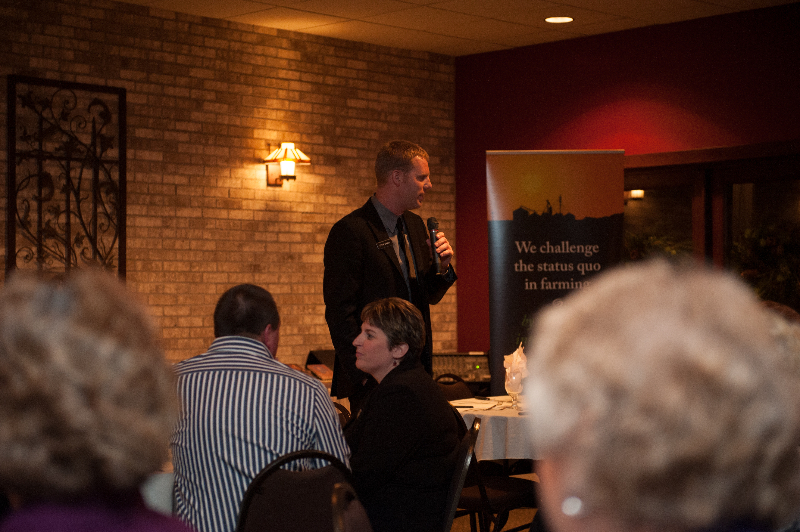
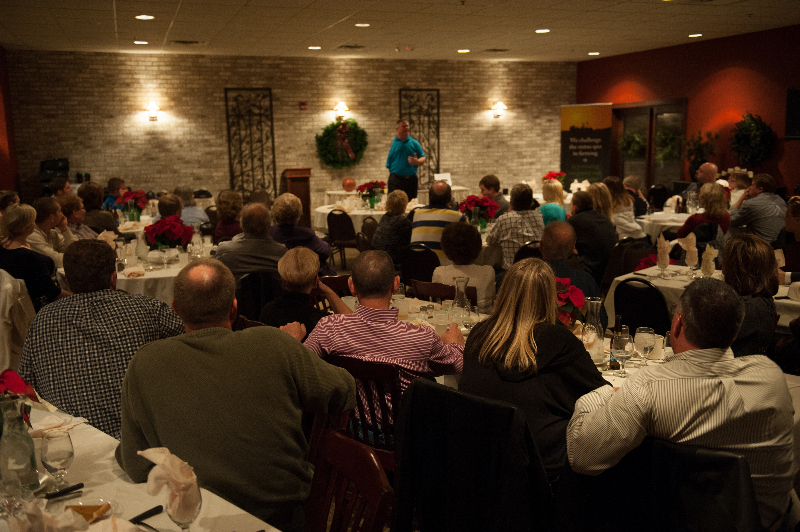
In celebration of another great year, we held our appreciation event last week with our amazing clients, co-workers and friends.  The event was a wonderful success and we truly are grateful for your patronage over the last year.

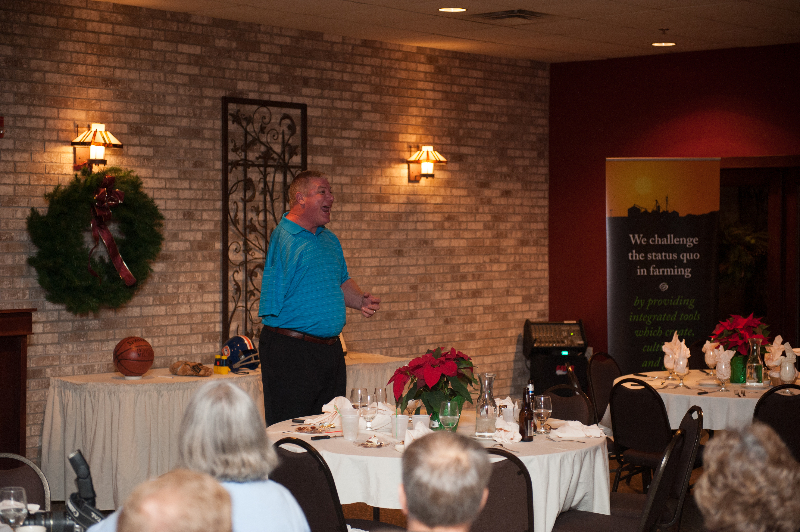
We wanted to make this event something special and inspiring; something for you to really enjoy and relate to!  Scott, High Yield Specialist, met Ron “Gus” Gustafson of Fully Armed a while back and he immediately knew he wanted Gus to share his story with you too.  During the event we had the pleasure of listening to Gus tell us his story in person.

Gus is a man who has turned personal tragedy into triumph.  Listening to his heart-touching message was unforgettable and very inspiring!  2012 had its challenges for all of us, but Gus’ story made us realize that we too can turn our set-backs into come-backs.

Who is “Gus”

Raised on a farm in Lyons, Nebraska, Ron “Gus” Gustafson was a standout basketball player in high school in spite of having lost his right arm and shoulder in a tragic childhood farm accident. After a knee injury ended his collegiate basketball career, he was devastated. But, once again, his faith and courage sustained him and he redirected his energies, building outstanding academic and business careers.

Watching Gus spin a basketball, then a football helmet, from one finger to the next, was fun and encouraging to see.  Gus told many great stories, some hard to imagine, about the difficult situations he has been able to overcome throughout his life.  Gus taught us that we should always have the courage to face the next challenge; all things are possible, even when everyone else says it’s impossible.

With a theme of overcoming obstacles and our thankfulness for all we have been given, Joel, Director of Grower Development, reminded us of That Inspiring Past “Take Time for Ten Things”.  What a great way to start each day with these 10 simple ideas to stay positive and remember those who we are thankful for.

1. Take time to work.  It is the price of success

2. Take time to think.  It is the source of Power.

3. Take time to play.  It is the secret of youth.

4. Take time to read.  It is the foundation of knowledge.

5. Take time to worship.  It is the highway to reverence.

6. Take time to enjoy friends.  It is the source of happiness.

7. Take time to love.  It is the sacrament of life.

8. Take time to dream.  It hitches the soul to the stars.

9. Take time to laugh.  It lightens life’s burdens.

10. Take time to Pray.  It helps bring Christ near and washes the dust of earth from your eyes.

Source: Future Farmers of America, Minnesota 1930-1955 – Agnes Harrigan Mueller

We are so thankful for you; our clients, co-workers and friends, and we are glad you were able to spend an evening in celebration with us.  We look forward to an exciting and prosperous 2013!

The entire evening was very nice and motivational!  You are truly making the most of your gifts as well as overcoming your challenges and that is proven with the quality of friends and customers that gathered last evening.  You and your team put together an absolute first rate evening and I am proud and honored to be the insurance advisor for your team. – Joel H.

Were you as inspired as we were by Gus’ story and accomplishments in life?  Tell us what your favorite story Gus shared was in the comments below!

Don’t Focus on Obstacles, Focus on Possibilities

Obstacles don’t have to stop you.  If you run into a wall, don’t turn around and give up. Figure out how to climb it, go through it, or work around it.”  Michael Jordan

Obstacles are simply what a person sees when they take their eyes off the goal.  How do you avoid obstacles in farming each year?  Do you stump them by setting goals and having a plan in place to meet them?

One of the best ways to set goals and to be prepared for those obstacles is to set up a Risk Management Plan that will keep the focus on maximizing your production and farm profitability.

Obstacles defined by others are not setbacks as you might expect.  When you have a plan in place, situations like the horizon of black clouds that threaten our crop with hail or strong winds won’t keep you up at night.  You will be able to sleep knowing the appropriate multi-peril protection is in place!

Common known obstacles for the farmer such as hail, drought, fungus, green snap and about 100 other possibilities won’t threaten your business with a Risk Management Plan in place.  You have peace of mind knowing your goals will be met no matter what happens throughout the farming year.

Crop Hail Insurance offers several options:

  • All or a portion of your crop acres can be insured. You decide how much risk that you want to handle and then we write the policy to manage that risk.
  • Crops can be insured at any time up to a specific harvest date.
  • Protection for loss due to fire or loss in transportation is available.
  • Additional coverage is available to protect your revenue, profit, or to cover costs when you are faced with the need to replant, when these benefits are not protected by multi-peril crop insurance.

This fall’s revenue prices came in at $7.50/bu for corn and $15.39/bu for Soybeans.  Even though we cannot plan the 2013 base price just yet, we can discuss how tools like multi-peril crop insurance, crop hail, wind, green snap and total weather insurance will help you plan for a successful year in 2013.

Corn Capital Innovations will help you

  • Understand the role of crop insurance and how it should tie into your marketing strategy.
  • Pick a policy based on what is best for your operation, not simply based on the cheapest cost.
  • Understand that crop insurance can be used for much more than just catastrophic yield loss.

Remember not to focus on obstacles, but to focus on the possibilities!

Contact us to set up a Risk Management Audit with you to determine the appropriate plan for your 2013 season.

A Reflection On What We Are Thankful For in 2012

Every November, we reflect back on what we are thankful for.  It is easier to get caught up in the things that did not go right throughout the year then what did go right.  Agriculture is a profession that many feel fortunate to work in, and can find many things to be thankful for.

Whether it was the June hail storms or the August wind storms that rolled through our territory it was gut wrenching to see a great looking crop get shredded by hail and wind.  It was here that growers where thankful for the risk management plan they had in place to manage such an event.

“Having the proper MPCI, hail and green snap coverage allowed growers to continue to move forward realizing 2012 may not have been a bin busting year, however, with these tools in place, your financial situation will be left intact and able to prepare for 2013 with a very optimistic outlook.” Says Alyssa Hammerschmidt ,  Crop Insurance Specialist.

No matter what your crop produced, growers with Corn Capital Innovations witnessed the power of integrating the four components of profitability together and they understand they can only control a minute number of the thousands of variables the crop is faced with each year.

“Our clients that had a production plan, risk management plan, and marketing plan all realized that the variability of Mother Nature could only impact their operation so much.  These plans brought comfort and thankfulness that they were proactive instead of reactive after weather events.”  Says Joel Mathiowetz,  Director of Grower Development.

The team at Corn Capital Innovations is Thankful for all our clients. Whether you worked with us on production, risk management, or grain marketing we enjoyed the journey we took in 2012 and are very excited for the plans we have in place for 2013.

For more of the latest information on how the Corn Capital Innovations team is a Great Hand in Farming, Click Here to contact us.

« Previous Page
Next Page »